

Mechanized laying of cable and HDPE ducts
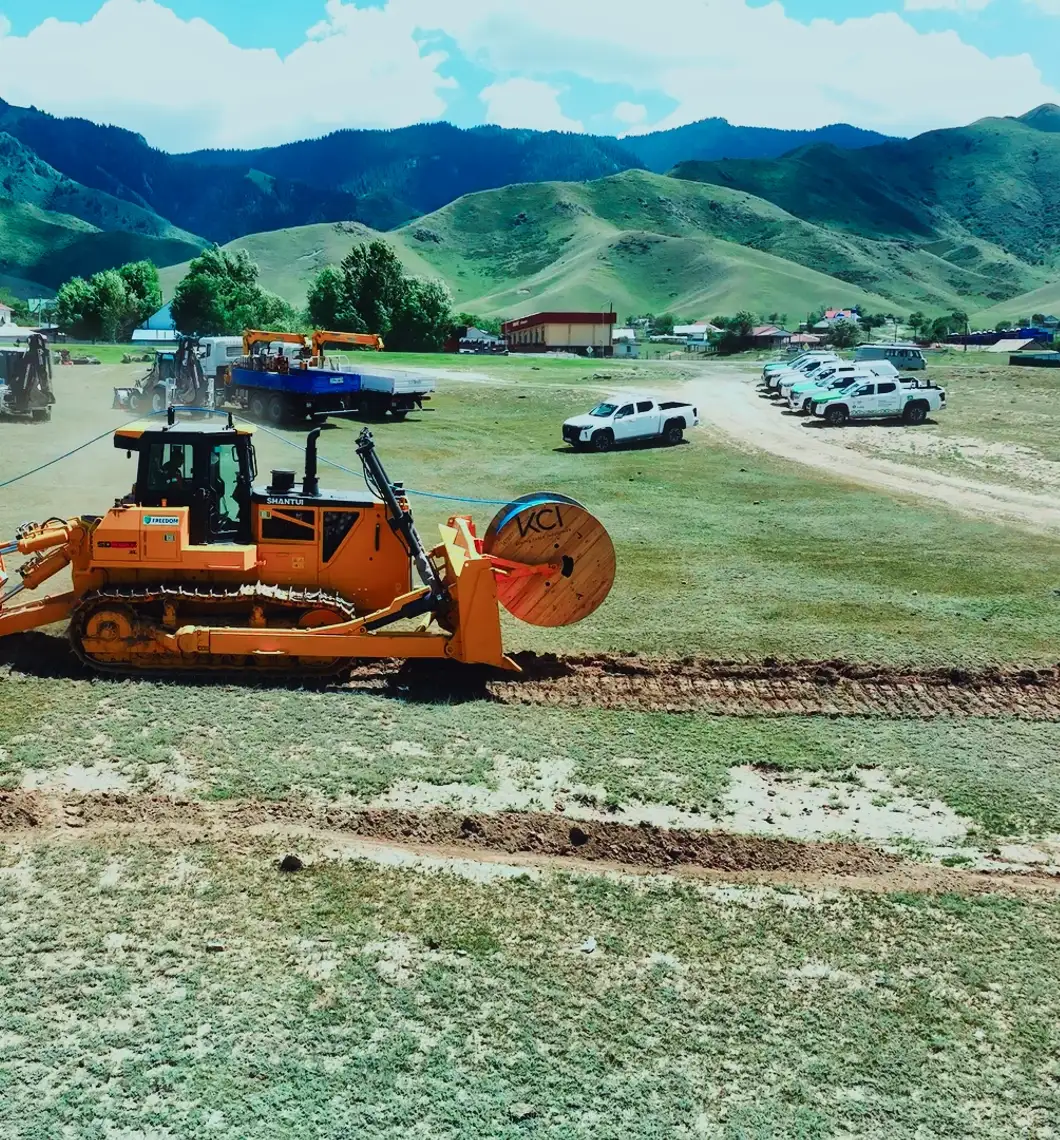
We lay cable and protective HDPE ducts with mechanized columns: cable layers based on Shantui bulldozers place the line in the ground to a depth of 120 cm in a single pass - up to 40 km a day. We mobilize a column with its equipment and crew for the project in the regions of Kazakhstan by own tractor units.
For an estimate, specify the route length, region, soil category and timeline.
Scope of work
Where mechanized laying is used
A method for backbone and extended linear facilities where the route runs in the ground for tens and hundreds of kilometers.
Backbone FOCL
Intercity lines in the ground - 942 km in five months in the west and south of the country
Protective HDPE ducts
Laying a duct in the ground into which the cable is then blown
Regional networks
Branched routes across districts - 4 253 km in Almaty Region
Category 1-5 soils
Light and heavy columns matched to the soil category of the section
Any weather
Heavy columns work regardless of weather conditions
A column per section
A column with its crew for a separate section of a general contractor
Stages
Five operations, one pass
The field cycle of a column is part of the full construction cycle, from survey to handover to the client.
-
Route staking
The route axis is staked out before the column passes
-
Trench ripping
Preparing the soil along the route axis before laying
-
Cable laying
The cable or HDPE duct goes into the ground to a depth of 120 cm
-
Backfilling the trench
The trench is backfilled with soil behind the laying
-
Restoring the ground and road
The surface and roads are restored after the pass
Equipment
Column composition
A cable layer, bulldozers, an excavator, a crane truck, a lowboy and support vehicles - all from the own fleet.
The full fleet-
Cable-laying columns
16 bulldozersMechanized FOCL laying in the ground to a depth of 120 cm.
Up to 40 km a day in tandem, totaling up to 1 700 km of cable a month.
Shantui SD34 - 6 · Shantui SD32 - 8 · Shantui SD22 - 2
-
Backhoe loaders
24 unitsEarthworks: pits for HDD, trenches on difficult sections, loading.
Hidromek 102B - 24
-
Crane trucks
17 unitsLoading and delivery of fiber-optic cable drums and materials along the route.
DongFeng 6x6 - 17
-
Tractor units and lowboys
11 unitsHauling heavy equipment between sections, mobilizing columns to site.
HOWO V7 - 3 · HOWO MAX - 6 · SITRAK - 2
-
Tractors
5 unitsSupport works on the route and column support.
DongFeng DF904 - 5
-
Pickups
90 unitsMobility of crews and engineering staff along the full length of the route.
Changan Hunter Plus - 43 · Great Wall Poer - 36 · GW Poer Kingkong - 11
Output
Column pace by soil category
Capacity of light and heavy columns per the production program.
| Column | Soils | Per day | Per month |
|---|---|---|---|
| Light column | categories 1-2 | up to 30 km | up to 600 km |
| Heavy columns in tandem | categories 3-4 | up to 40 km | up to 900 km |
| Heavy column | category 5 | up to 10 km | up to 200 km |
In total, five columns and sixteen bulldozers - up to 1 700 km of cable a month. Data: the company production program.
Timing and cost
Timing and what affects the cost
The timeline is calculated from the column pace in the soils of the section: from 10 km a day in category 5 soils to 40 km for heavy columns in tandem.
Route length
Kilometers and number of sections
Soil category
Determines the column type and pace
Number of columns
In light soils a heavy column splits into parallel groups
Cable or HDPE duct
What is laid in the ground on the section
Obstacle crossings
Sections the column cannot pass: HDD, pipe jacking or trench
Region and mobilization
Site remoteness and hauling the column by tractor units
For an estimate, specify the route length, region, soil category and timeline.
Work regions
Where we work
Six regions where the company works. Equipment reaches other sites with our own tractor units.
- West Kazakhstan Region
- Atyrau Region
- Kostanay Region
- Akmola Region
- Zhetysu Region
- Almaty Region
Licence and permits
Basis of the permit
State Category II construction and installation license № 01 ГСЛ-КР №010236; first issued 12.10.1999.
-
06Linear structures
Power transmission lines up to 110 kV and above, nationwide and international communication lines, oil and gas pipelines
-
04Special works in soils
Drilling works, underwater technical works, works on the continental shelf, foundation construction
Projects
Completed projects
Kazakhstan backbone FOCL: western and southern directions
942 km in the ground
Western and Southern Kazakhstan · August - December 2025
Project details Regional network · B2G + B2COptical infrastructure of Almaty Region
4 253 km of FOCL
11 districts of Almaty Region · October 2024 - September 2025
Project details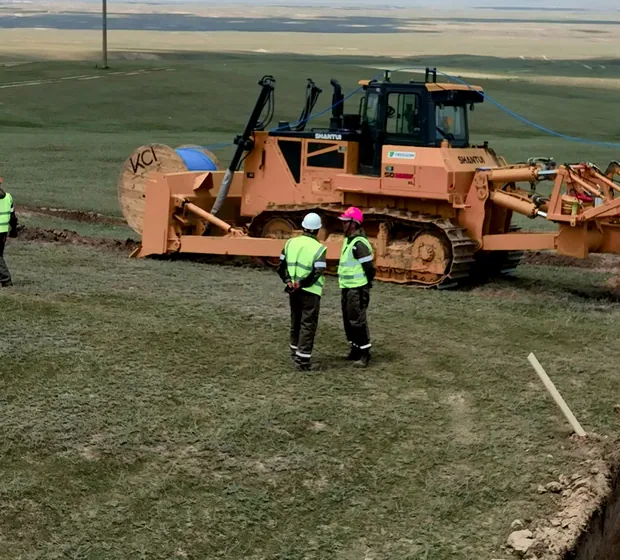
Related sections
FOCL construction
Full ten-stage cycle
Technology: columns
Capacities by soil category
Backbone FOCL
942 km in 5 months
Equipment fleet
170 units of own equipment
Further reading
FOCL
Rural internet: what it actually takes to connect
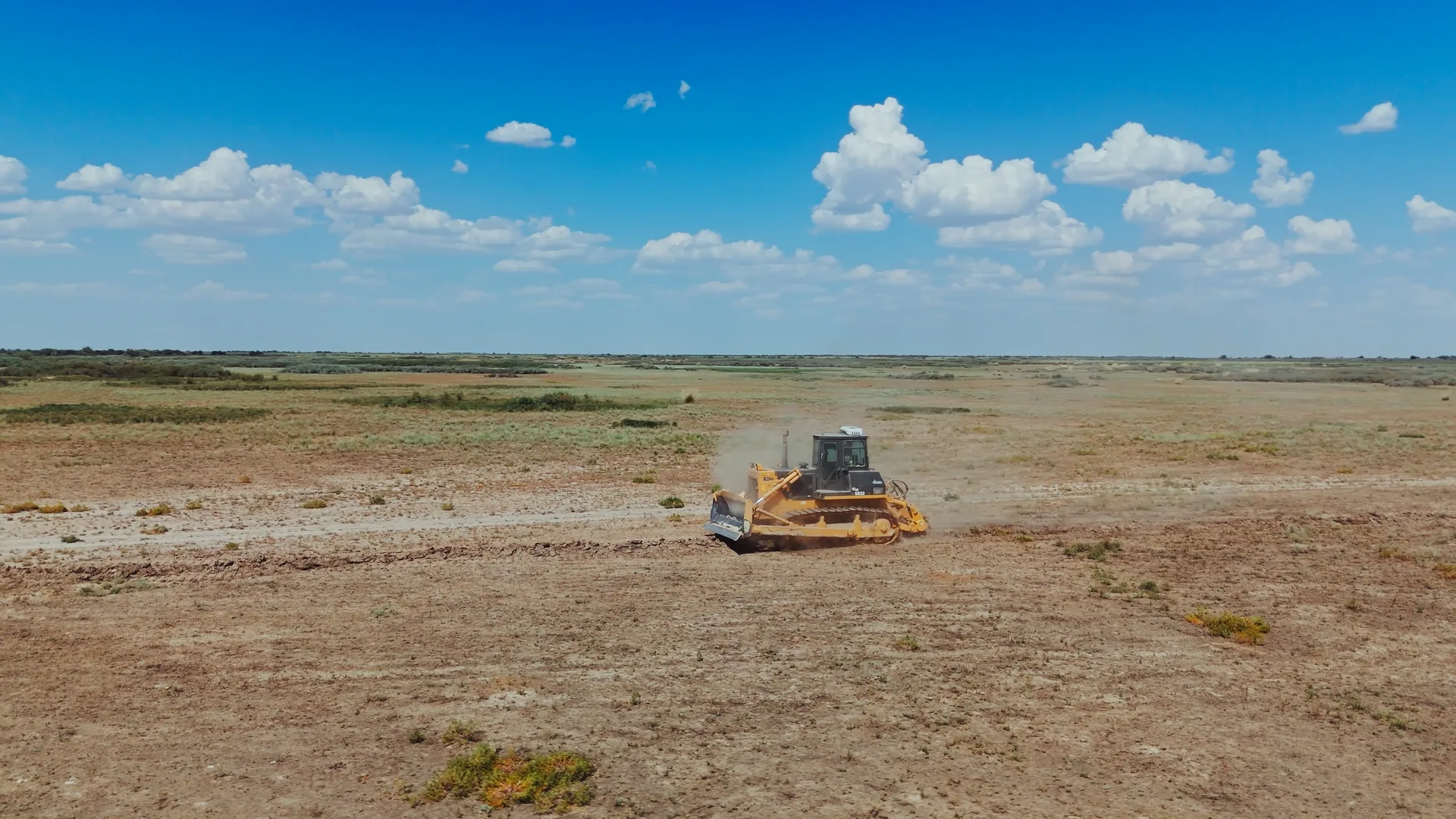
Route length alone does not describe a connection project. In three of our projects each household in the coverage area accounts for about the same 21–22 m of route, yet the work is different. A feeder line between settlements and a distribution network inside a settlement differ in volumes, equipment, logistics, and timelines, so a project is assessed by its mix of work, not by kilometres alone.
Read article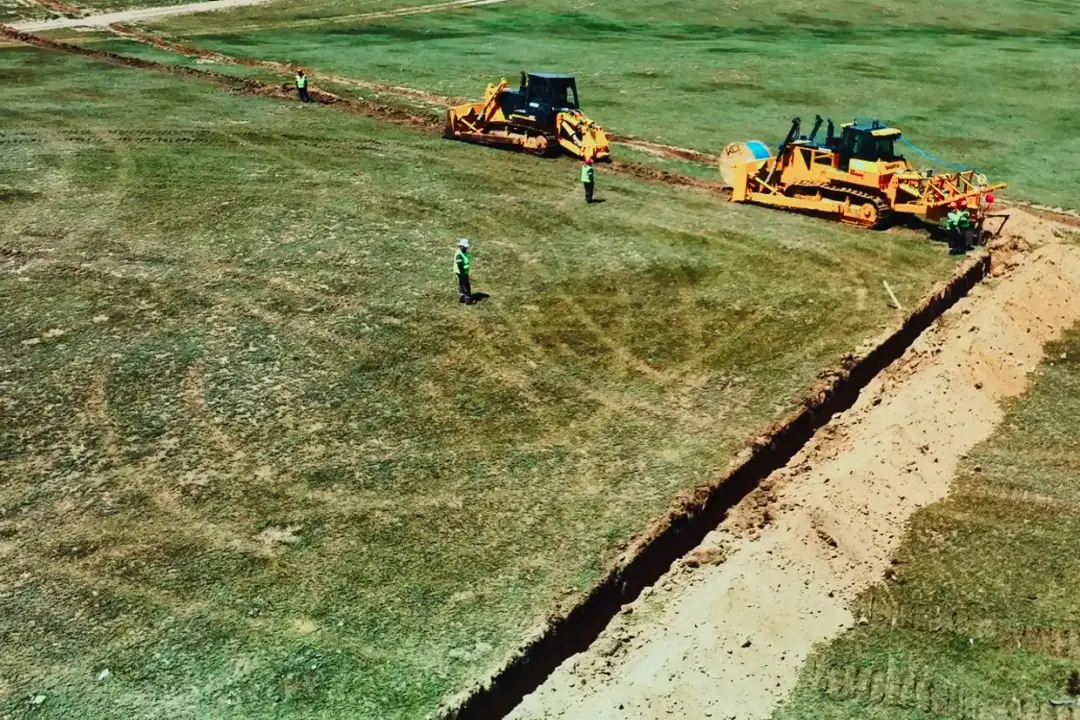
FOCL
West–East backbone: what the build actually takes
Kilometrage alone is not enough to estimate a backbone build timeline: length sets the volume of work, while the pace depends on soil category, the number of crossings, logistics, and site conditions. A light column covers up to 30 km a day in category 1–2 soils; in category 3–4 soils heavy columns work coupled and together cover up to 40 km a day; and every crossing under a river or a railway is a separate operation. From August to December 2025 we laid 942 km of backbone FOCL in the ground: 577 km on the western direction and 365 km on the southern.
Read articleQuestions and answers
The essentials in brief
How does mechanized laying differ from trench laying?
A cable layer places the cable in the ground to a depth of 120 cm in a single column pass: staking, ripping, laying, backfilling and restoration. The trench method is used on hard-to-reach sections where a bulldozer cannot work.
How many kilometers a day does a column cover?
A light column in category 1-2 soils - up to 30 km a day, heavy columns in tandem in category 3-4 soils - up to 40 km, a heavy column in category 5 soils - up to 10 km. The combined capacity of five columns - up to 1 700 km a month.
Do you lay HDPE duct, not only cable?
Yes. Besides cable, the column lays protective HDPE duct in the ground, into which the cable is then blown.
Can a column be engaged for a section as a subcontract?
Yes. We work as a general contractor, specialist contractor or subcontractor; equipment is mobilized by own tractor units. The formats are described on the For partners page.
Do the columns work in bad weather?
Heavy columns work regardless of weather conditions.
Newsletter
New sites and equipment - by email
Completed projects, new equipment and permits - brief, and only when there is something to show. Unsubscribe in any email.